

Lister Härads Tingshus - Court house
- Sölvesborg
- +46 456-81 61 81
- visit@solvesborg.se
- Tingshusgatan - 294 34 - Sölvesborg
-
Tuesdays 11:00 am - 3:00 pm.
23 june - 4 august. -
<% getFormattedDate(occasion) %> <% setPopoverDateLabel(occasion) %>
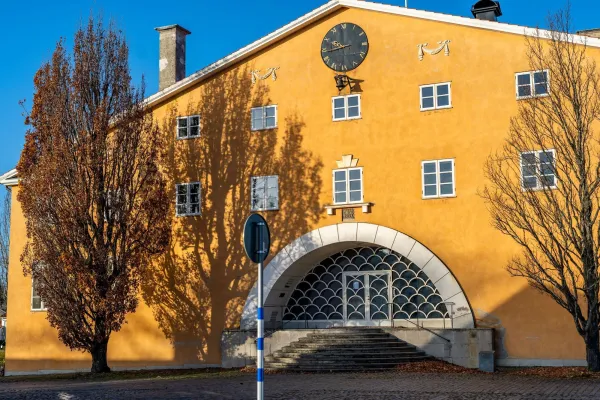
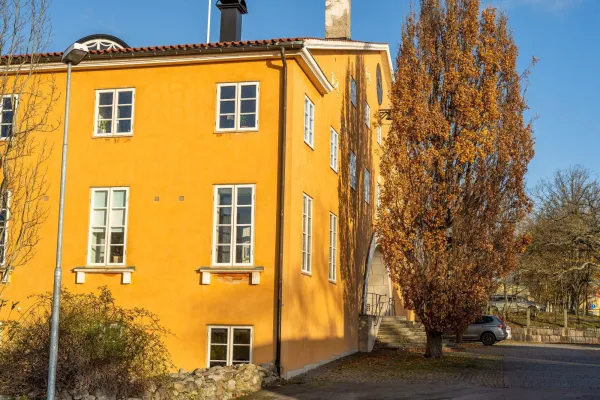
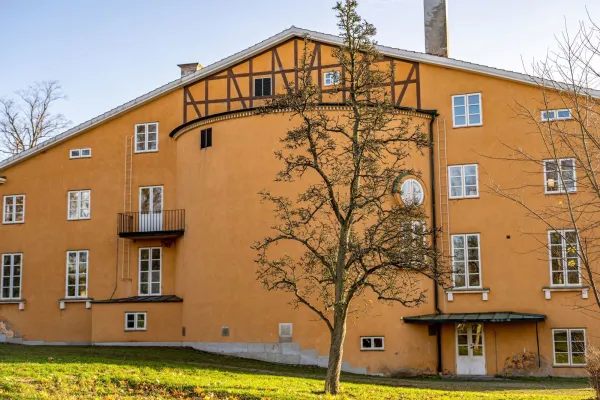
Sölvesborg´s and Lister´s Court house from 1919-1921. One of the town´s - and indeed one of Blekinge´s - most remarkable buildings, designed by the famous architect Gunnar Asplund.
Beskrivning
The Courthouse is constantly visited by architecture students from all over the world. The courthouse building is located in the background on a straight street that extends from the railway station. By emphasizing the gable, the acclaimed architect Gunnar Asplund has given the house a monumental character even though it is not particularly large.Before the courthouse in Sölvesborg was built, there was, since 1795, the Lister district courthouse in Norje. However, they wanted to move the operations to Sölvesborg because it was the largest town. The new courthouse was designed in 1919 by architect Erik Gunnar Asplund. Asplund is actually the only Swedish architect of the 20th century who has had an international influence. Even when he designed the courthouse, he was already relevant in Blekinge, having designed two private villas in Ronneby and Karlshamn's secondary school, now part of Väggaskolan. Among his most famous works are the city library and the Skogskyrkogården cemetery in Stockholm.
But the drawings for the new courthouse were controversial. There were people in Sölvesborg who thought that the building would become the ugliest building in the city. If it had not been built outside the city planning area, the building committee and mayor would probably have stopped the construction.
The courthouse was built in 1920-21. The main contractor was the city planner Klas Modig. The construction cost had been estimated at 200,000 kronor, but the final bill ended up being around 350,000 kronor.
The building is an early example of the so-called 1920s classicism. It is a simple brick building with concrete floors on the ground floor and above the courtroom. The segment-shaped entrance is similar to the entrance of the station building. Other facades of the courthouse have a more intimate and informal character.
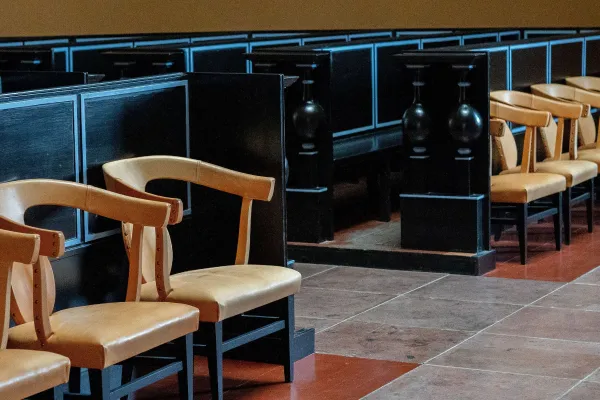
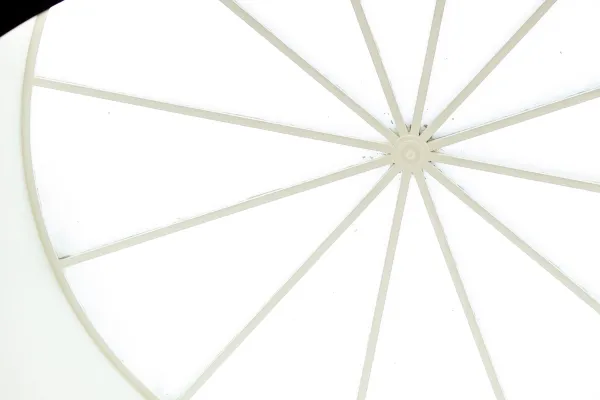
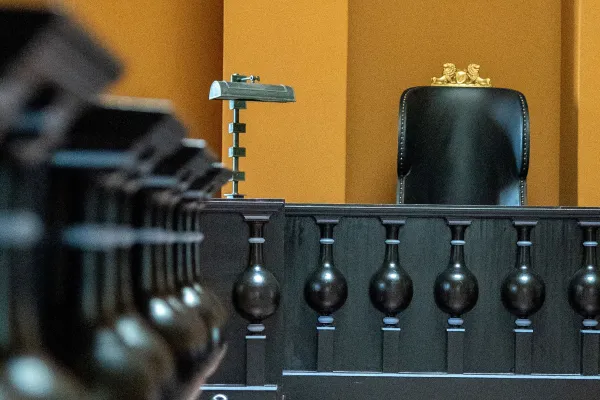
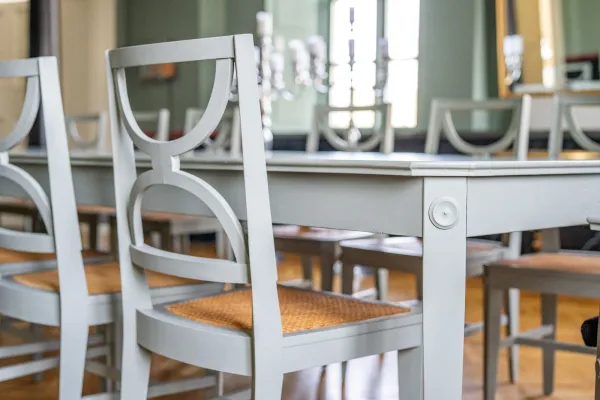
Asplund was very interested in the construction and participated in the entire process. He also designed interior details and furniture, such as the judge's chair, table, floor clock and the painting above the entrance. He was very meticulous and paid attention to details. One detail that can be mentioned is the small round window in the courtroom. In the afternoon, it lets in sunlight so that it falls on the witness stand. The incident light has been called "the light of truth". All the round shapes that recur in the woodwork, room design, windows, etc. are believed by some to be due to his wife being pregnant during this period.
Until the summer of 2001, the house was used as a court, then the court operations were moved to Karlshamn. The building has since stood empty but is now being used for new activities. In 2005, the savings bank bought the Courthouse for 2.9 million kronor. It was then donated to the municipality of Sölvesborg and its residents, with the requirement that it be turned into a cultural center.
The Courthouse has been a listed building since 1993. The building is located within an area of national interest for cultural environment conservation: Sölvesborg city, whose town plan is one of the country's best-preserved examples of regular market towns from the late Middle Ages. The city grew up under the protection of Sölvesborg Castle, one of the most important Danish national fortresses of the Middle Ages. After a city fire in 1801, the trading town was rebuilt with a still partly well-preserved small-scale settlement.